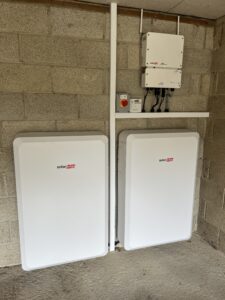
Adding a battery to your home or workplace is one of the simplest ways to get more value from your electricity, regardless of whether you have a solar PV system. It can provide flexibility, resilience, and greater control over when and how you use energy.
Battery technology is also evolving. Alongside lithium batteries, new options are starting to reach the market, including sodium batteries, which we have recently started installing for our customers. For buyers, this is great news – more choice, and more solutions that can be tailored to your individual project and priorities.
Why a battery makes sense
A battery allows you to store electricity and use it when it suits you best.
For homes without solar, installing a battery can still deliver real savings. By charging overnight on cheaper off-peak tariffs and using that energy during peak hours, many households can significantly reduce their bills. We covered this in more detail in a recent post on making the most of off-peak charging.
Established tech, and what’s next
Lithium batteries remain a reliable option for domestic and commercial energy storage, and continue to be a great fit for many. However, we are seeing new technologies beginning to emerge.
Sodium batteries are one of the most exciting developments. Sodium is far more abundant than lithium, which has the potential to reduce pressure on supply chains over the long term. Sodium batteries also perform well across a wide temperature range, making them a practical option for year-round use in typical UK installation locations, such as garages and outbuildings.
The great news about sodium batteries is that they can be retrofitted to your existing solar PV system, without having to make any significant changes.
Choosing the right battery for your home
There is no single “best” battery – the right battery depends on how you use energy, whether you have solar PV, your energy tariff and where the system will be installed.
At Lumos PV, we can talk you through the different options, and make recommendations based on your budget, your energy requirements and what your goals are. Regardless of which battery you choose, the goal is the same: helping you to store energy and reduce your reliance on the grid and fossil fuels.