Ask Lumos is a series from Lumos PV, answering the questions we get asked most about solar, batteries and home energy. Based on Worton Park, Oxfordshire, we work with homeowners, businesses and community organisations across Oxfordshire and the Cotswolds. In this blog, we’ll be looking at EV chargers. Head to our Resources section to read our other blogs on solar PV systems and home battery storage.
Electric vehicles no longer feel like a niche option – the infrastructure is finally in place to allow owners to navigate the country, without the dreaded range anxiety. In 2025, UK EV sales hit a record 473,348, a 23.9% increase on the previous year, and the government has confirmed that the sale of new petrol and diesel vehicles will end by 2030. For most drivers, the switch to electric (or hybrid!) is no longer a question of if, but when.
One of the most practical steps you can take alongside that switch is installing a dedicated EV charger at home, or at your place of work. Here, we share the answers to some of our most frequently asked questions.
What is an EV charger?
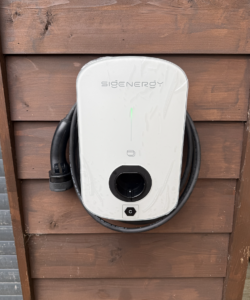
An EV charger takes electricity, either from the grid or from a battery, and uses it to charge an electric or hybrid vehicle. While it is possible to charge an EV from a standard domestic plug socket, a dedicated charger does the job significantly faster and more efficiently, and is a much safer long-term solution.
As more homes and businesses make the move to electric, having a charger installed is quickly becoming less of a luxury and more of a practical necessity.
Why install one now?
Beyond the obvious convenience, there are some compelling financial reasons to act sooner rather than later.
Research suggests that installing an EV charger at home could add between £3,000 and £5,000 to the value of your property. And Vauxhall has recently partnered with Zoopla to add EV charging information to property listings, reflecting research showing that 40% of UK drivers now factor proximity to EV charging into their decision when moving home. As the 2030 deadline approaches, that figure is only likely to increase.
For businesses, the case is equally strong. Offering EV charging as a workplace benefit is an increasingly attractive perk for employees, supports your ESG commitments, and positions your organisation ahead of a shift that is coming.
Where can an EV charger be installed?
The short answer is almost anywhere. At Lumos PV, we install EV chargers across a wide range of domestic and commercial properties across Oxfordshire and the Cotswolds, and we can recommend the right solution depending on your setup and budget.
For homes, a charger can be installed inside a garage or outside the property for straightforward access. If you are also considering solar panels or battery storage, an EV charger fits naturally into that wider system, allowing you to charge your vehicle directly from the energy your home generates.
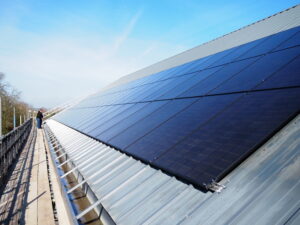
For businesses and commercial properties, we have worked on a number of installations where organisations have combined solar panels, battery storage and EV charging into a single, integrated energy solution. Whether you are looking to offer charging as a benefit for employees, reduce your operational energy costs, or meet carbon reduction targets, we can design a setup that works for your site and your budget.
What are the benefits?
The benefits of installing a dedicated EV charger go beyond simply being able to charge your vehicle at home.
- Convenience: Charging overnight means your vehicle is ready to go each morning without needing to plan around public charging points. Combined with a smart energy tariff, this can also be significantly cheaper than using public chargers.
- Cost: The savings can be substantial. Drivers on a smart time-of-use tariff, such as Octopus Intelligent Go, can save up to £820 a year on fuel costs compared to relying on public charging or standard rate electricity. If your charger is connected to a solar PV system, the savings go further still, as you can charge your vehicle using electricity your panels have generated for free.
- Environmental: Charging from a solar-powered system means your vehicle is running on genuinely clean energy, reducing your reliance on fossil fuels and cutting your carbon footprint in a meaningful way.
How much does it cost, and how can I fund it?
The cost of an EV charger installation varies depending on the type of charger, the complexity of the installation, and whether it is part of a wider solar or battery system. At Lumos PV, we install a range of chargers to suit different budgets and requirements, and we will always recommend the most appropriate option for your situation.
On funding, there are a few options worth being aware of. Businesses and landlords may be eligible for support through the Workplace Charging Scheme or the Electric Vehicle Infrastructure Grant, which can offset some of the upfront installation cost. It is worth checking current eligibility on the government’s website, as these schemes are updated regularly.
For homeowners, pairing an EV charger with a smart tariff is one of the most straightforward ways to reduce ongoing costs. Letting your energy supplier know you have an EV charger installed can unlock access to lower overnight rates, and some suppliers offer specific EV tariffs designed to make the most of off-peak charging.
If you are also considering solar panels, a battery, or both, the investment case becomes even stronger. We can talk you through the options and help you understand the likely payback period for a combined system.
What next?
Whether you are a homeowner looking to make the most of your electric vehicle, or a business exploring how EV charging fits into a wider energy strategy, our team would be happy to help.
Lumos PV are based at Worton Park, just outside Oxford, and work across Oxfordshire and the Cotswolds. We install a range of EV chargers for domestic and commercial properties, and can design solutions that integrate with existing or planned solar and battery systems.
Get in touch to arrange a survey, or visit our Resources Hub to see examples of our recent installations. You might also find our Ask Lumos guides to solar PV systems and home battery storage useful further reading.