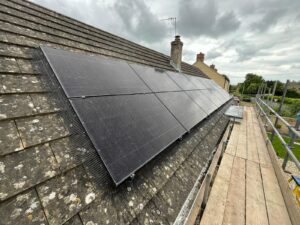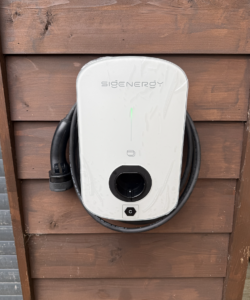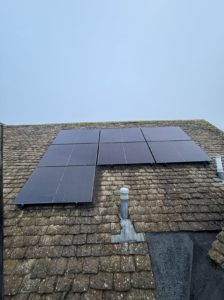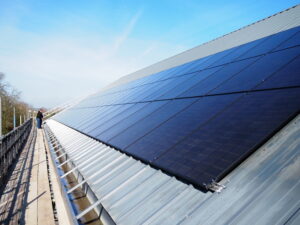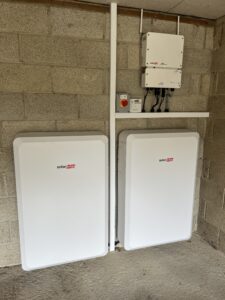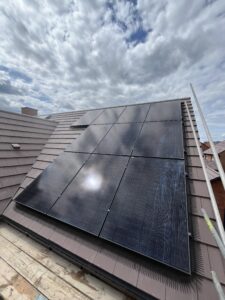
We recently completed a major solar and storage installation at Stanford-in-the-Vale Village Hall, transforming it into a true community energy hub.
This 72-panel, battery-backed system cuts carbon and lowers bills, but it also does something more: it establishes the hall as an SOS Point, a designated safe space where local residents can gather during emergencies or prolonged power outages, with power security provided by the solar and storage system.
System highlights
- 72 x 445W panels
- Total capacity: 32 kWp
- 18kW SolarEdge inverter
- 5 x SolarEdge 4.6kWh stackable batteries (23kWh total storage)
What does this mean in practice?
The system is estimated to generate between 2,800 and 3,200 kWh per month, or 34,000 to 38,000 kWh per year. For a busy village hall, that represents a significant reduction in grid reliance and a substantial cut to running costs, freeing up funds for the community rather than energy bills.
This project is a good example of how solar is not only an environmental decision, but a practical one. In a rural area, having a building that can operate independently of the grid during an outage provides real reassurance for the community it serves.
Community and charitable projects are zero-rated for VAT on solar installations, and there are a range of grants and funding options available that can make the upfront cost more manageable. As with Charlbury Community Centre and other community projects we have completed in the area, it is worth exploring what funding may be available before you start.
Get in touch to find out how solar could work for your community project.